
What Happens in an EMDR Therapy Session, From First Visit to Follow-Up
What Happens in an EMDR Therapy Session, From First Visit to Follow-Up
Starting EMDR therapy can feel a little like standing at the edge of a pool, unsure how cold the water will be. If you feel nervous, tired, or wary, that makes sense. Trauma, anxiety, and overwhelming stress can leave you bracing for the worst.
The good news is that what happens in an EMDR therapy session is usually more structured and more gentle than many people expect. EMDR is a research-backed, trauma-focused approach that helps your brain process memories that feel stuck, instead of only talking around them. You don't usually jump into your hardest memory on day one. First, you and your therapist build safety, gather history, and prepare your nervous system for the work ahead. When you meet with an emdr trained therapist or certified emdr therapist, the goal is to help you feel supported, steady, and in control.
You start with safety, trust, and a plan that fits your history
Before any eye movements, taps, or tones begin, your therapist gets to know you. That early stage matters because EMDR isn't a one-size-fits-all method. Your pace depends on your symptoms, your stress level, and your trauma history.
If you live with PTSD, complex PTSD, childhood trauma, or abuse-related symptoms, you may need more time in the setup phase. That's not a delay. It's part of good care. The stronger the foundation, the safer the work tends to feel later.

Your therapist learns your story without asking you to share every detail
In the first sessions, you may talk about what brings you in now. That could include panic, intrusive memories, trouble sleeping, feeling on edge, depression, relationship strain, or body-based reactions like tightness in your chest or a sinking feeling in your stomach.
Your therapist also asks about major life events, past trauma, current triggers, and what you want to feel different. If family stress, infidelity, court pressure, or child welfare concerns are part of your life, those pieces may matter too. A trauma-informed therapist looks at the full picture, not just one symptom.
You don't have to tell every graphic detail for EMDR to work. That's a relief for many people. The focus is not on forcing a full retelling. Instead, your therapist helps you identify the memories and beliefs that still shape how you feel today.
You build coping tools before you process painful memories
Preparation often includes grounding skills, breathing, calm-place exercises, and ways to contain distress between sessions. Think of it like packing a first-aid kit before a long hike. You hope not to need every item, but you're glad to have them.
This step is especially helpful if you get flooded, shut down, dissociate, or feel easily triggered. Your therapist may teach you how to notice the room around you, track your breath, or shift your attention when your body starts to spiral.
That prep work gives you more control. It also helps you stay in the present while touching painful material from the past.
During the main part of EMDR, you notice thoughts, feelings, and body sensations as your brain processes
Once you and your therapist decide you're ready, the session moves into active processing. This is the part many people picture when they think of EMDR, but it's only one phase of treatment.
At the start, your therapist helps you choose a target. That might be one memory, a repeated theme, or a present trigger linked to older pain. Then you identify what still feels charged about it.
You focus on one memory target and the belief that came with it
A target memory is usually specific. It may be a moment when you felt trapped, ashamed, rejected, scared, or powerless. Sometimes the memory is clear. Other times, it's more like a snapshot, a body feeling, or a scene that keeps replaying.
Along with the memory, your therapist asks what negative belief goes with it. Common examples include, "I'm not safe," "It's my fault," "I'm damaged," or "I can't trust anyone." Those beliefs often stick long after the event ends.
Then you identify a preferred belief you want to hold instead, such as "I'm safe now," "I did the best I could," or "I have choices." You may also rate how upsetting the memory feels in the moment and notice where you feel it in your body.
This part may sound clinical on paper, but in session it often feels simple and direct. Your therapist is helping you map the memory, like placing pins on a route before a drive. You aren't getting lost in it. You're naming what is there.
In some cases, the work also connects the past to the present and future. A memory from childhood may relate to present-day conflict, fear in relationships, or a strong reaction to being criticized. EMDR can also prepare you for future situations, such as setting a boundary, attending court, or seeing a family member.
You follow eye movements, taps, or tones while noticing what comes up
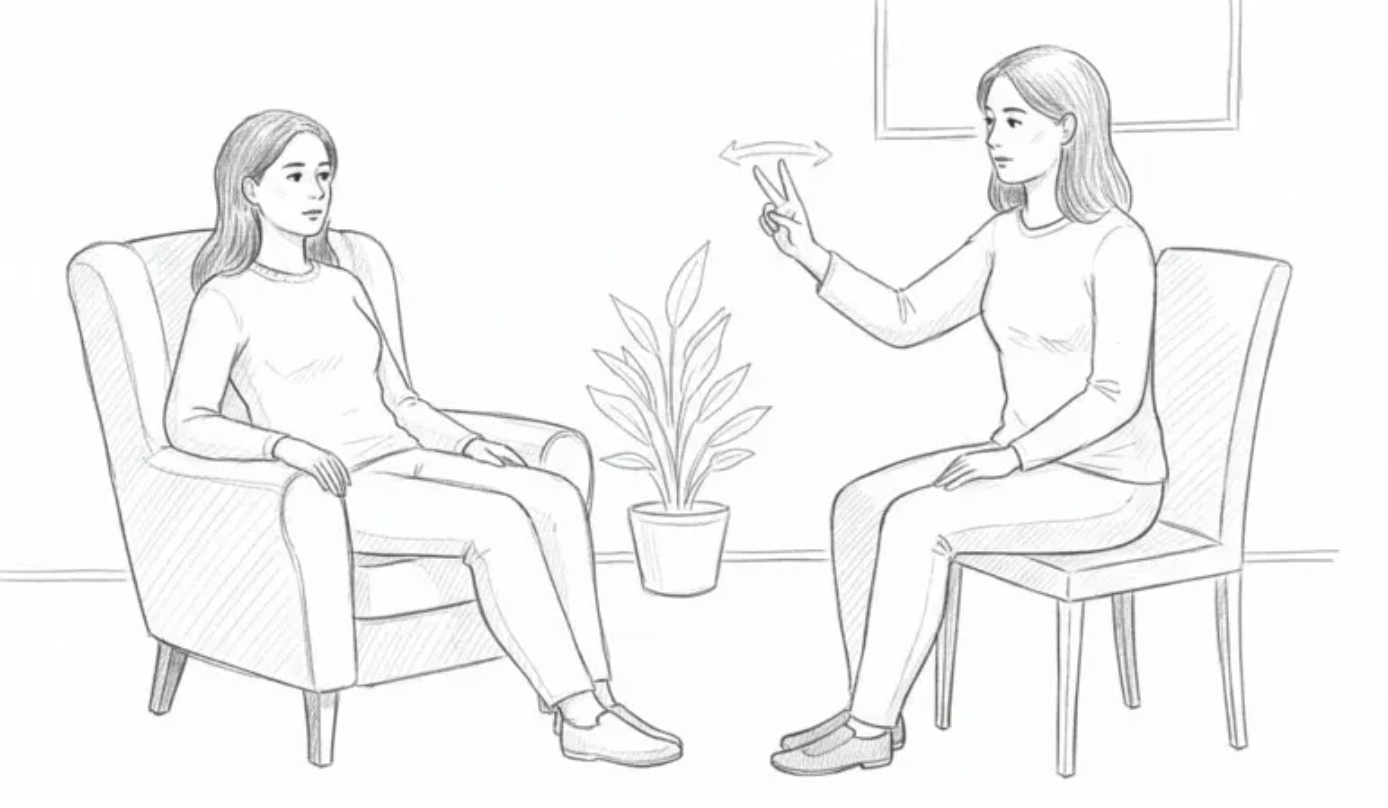
After the target is set, your therapist begins bilateral stimulation. That simply means back-and-forth input, often through eye movements, alternating taps, or tones in each ear.
If your therapist uses eye movements, you might follow their fingers moving side to side. If they use taps or buzzers, you may feel a gentle left-right rhythm. The sets are usually brief. After each one, your therapist asks what you notice.
What comes up can shift fast or slowly. You might notice a new thought, an image, a body sensation, an emotion, or even a memory you hadn't linked before. Some people feel tears rise. Others notice the charge fading. A few people feel almost nothing at first, and that's okay too.
There is no right response. You don't have to perform, explain perfectly, or force insight. Your job is simply to notice. Your therapist guides the pace and keeps bringing you back to the target when needed.
Most importantly, you stay awake, aware, and in control the whole time. EMDR is not hypnosis. You can pause, speak up, ask for a break, or stop at any point. A good therapist watches your window of tolerance and adjusts if you start to feel overwhelmed.
EMDR is less about reliving trauma and more about helping your brain file the memory in a way that no longer hijacks your present.
Over time, the target often loses intensity. The body may soften. The old belief can loosen its grip. Then the therapist helps strengthen the more grounded belief you want to carry forward.
A session does not end abruptly, you leave with closure and a next step
Even when the memory work is still in progress, your session should not end with you feeling dropped into the deep end. Closure is part of EMDR.
Your therapist helps you settle your nervous system before you leave
Near the end, your therapist brings you back to the room and to the present moment. You may be asked to notice your feet on the floor, name what you see around you, slow your breathing, or return to a calming image you practiced earlier.
This part helps your nervous system settle before you drive home, go back to work, or step into the rest of your day. You and your therapist may also review what came up and what to expect next.
Some people leave feeling lighter. Others feel tired, emotional, calm, or mentally full. All of those can be normal.

You may notice changes between sessions, and that is part of the work
After EMDR, your brain may keep processing. You might have vivid dreams, fresh memories, strong feelings, or a surprising sense of relief. Sometimes a trigger that usually hits hard feels a little weaker. Other times, you feel raw for a day or two.
That's why after-session care matters. Rest if you can. Drink water. Journal what you notice. Use the coping tools you practiced. If something feels intense, bring it back to therapy rather than trying to sort it out alone.
Between sessions, your mind may keep doing quiet repair work, much like your body heals after a hard workout.
How to know if EMDR feels like the right fit for you
EMDR can be a strong option if you understand your story but still feel stuck in your body, emotions, or relationships. Some people say, "I know it wasn't my fault, but I still react like it is." That's the kind of gap EMDR often addresses.
EMDR can help when talk therapy alone has not fully worked
Talk therapy can be deeply helpful. Still, insight doesn't always calm a trauma response. You may know the facts and still feel panic, shame, numbness, or fear. EMDR works from a different angle by helping your brain process the root memory more fully.
People often seek it for PTSD, complex trauma, childhood abuse, anxiety, infidelity, or repeated overwhelming stress. It can also help when family conflict, reunification stress, or court-related pressure keeps your nervous system on alert. In South Jersey, that can matter if you want someone who understands trauma recovery within real family systems, not just symptoms in isolation.
If you're searching for
emdr therapy new jersey,
emdr therapy nj, or
emdr therapy philadelphia, look for someone who can tailor treatment to your history instead of rushing the process.
The best next step is finding a therapist with trauma experience
Training matters. So does the therapist's ability to pace the work well. Look for an emdr trained therapist or certified emdr therapist with real experience treating trauma, PTSD, complex PTSD, childhood sexual abuse, and related issues when those apply to you.
If your life includes family reunification work, legal stress, or court-ordered treatment, it also helps to find a therapist who understands those settings. Trauma rarely lives in a vacuum. It often affects parenting, trust, relationships, and daily safety. A therapist who sees that wider picture can offer care that feels more grounded and more useful.
When the fit is right, EMDR doesn't feel like being pushed. It feels like being guided.
Conclusion
If you've been wondering what happens in an EMDR therapy session, the short answer is this, you don't walk in and relive everything at once. You start with safety, preparation, and a plan. Then, when you're ready, you process memories in a structured way that helps your brain and body stop carrying so much unfinished alarm.
Healing doesn't ask you to white-knuckle your way through the past alone. With the right support, EMDR can help you feel more present, more steady, and more hopeful. That's often where real
healing begins.